
How to Send Salawat
How to Send Salawat: Learn simple and authentic ways to send blessings upon Prophet Muhammad ﷺ using Arabic wordings, transliteration, meanings, practical steps, suitable times, and a realistic daily routine.
What Does It Mean to Send Salawat?
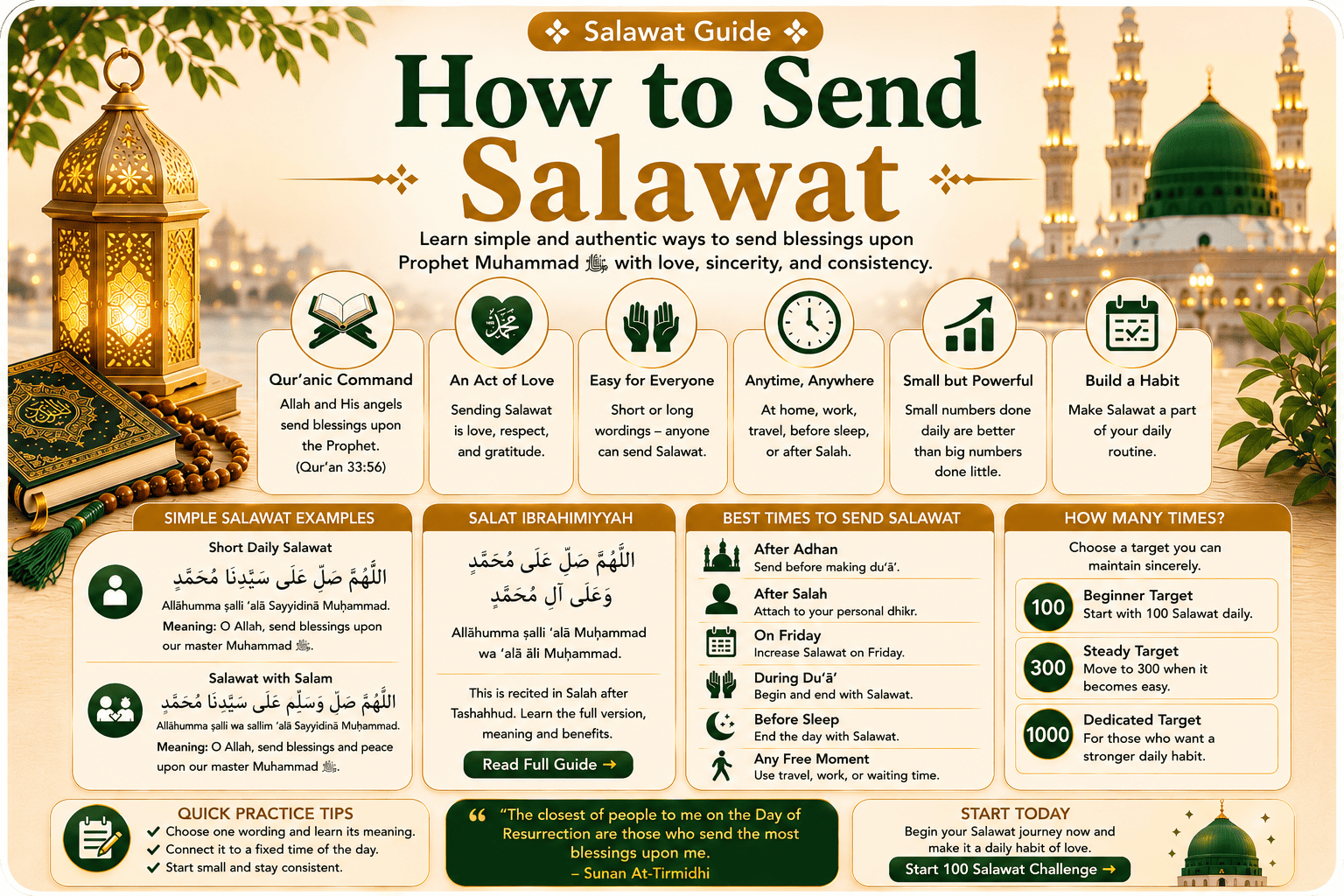
To send salawat means to ask Allah to bless, honour, and elevate Prophet Muhammad ﷺ. It is an act of obedience, love, respect, gratitude, and remembrance.
A Muslim may use a short wording, a wording that includes salam, or an established form such as Salat Ibrahimiyyah. The essential aim is to send blessings sincerely and respectfully.
The Qur’anic Foundation for Sending Salawat
Meaning: Indeed, Allah and His angels send blessings upon the Prophet. O believers, send blessings upon him and greet him with peace.
This verse forms the central Qur’anic foundation for sending blessings and peace upon Prophet Muhammad ﷺ.
Simple Ways to Send Salawat
Send a Short Daily Salawat
Transliteration: Allāhumma ṣalli ʿalā Sayyidinā Muḥammad.
Meaning: O Allah, send blessings upon our master Muhammad ﷺ.
This form is easy to memorise and suitable for beginners, children, and busy Muslims.
Open the Short Salawat Guide →Send Salawat With Salam
Transliteration: Allāhumma ṣalli wa sallim ʿalā Sayyidinā Muḥammad.
Meaning: O Allah, send blessings and peace upon our master Muhammad ﷺ.
This wording combines both blessings and peace upon Prophet Muhammad ﷺ.
Open the Salawat With Salam Guide →Send Salawat Using Salat Ibrahimiyyah
Salat Ibrahimiyyah is among the most established forms of salawat. Muslims recite it during the final tashahhud in salah.
Learning its complete Arabic text, transliteration, pronunciation, and meaning is especially valuable because it forms part of regular prayer.
Read Salat IbrahimiyyahHow to Send Salawat Step by Step
Choose a Sound Wording
Start with a short wording or Salat Ibrahimiyyah that you can pronounce and understand.
Understand the Meaning
Read the translation so the recitation becomes an intentional supplication rather than empty repetition.
Choose a Daily Time
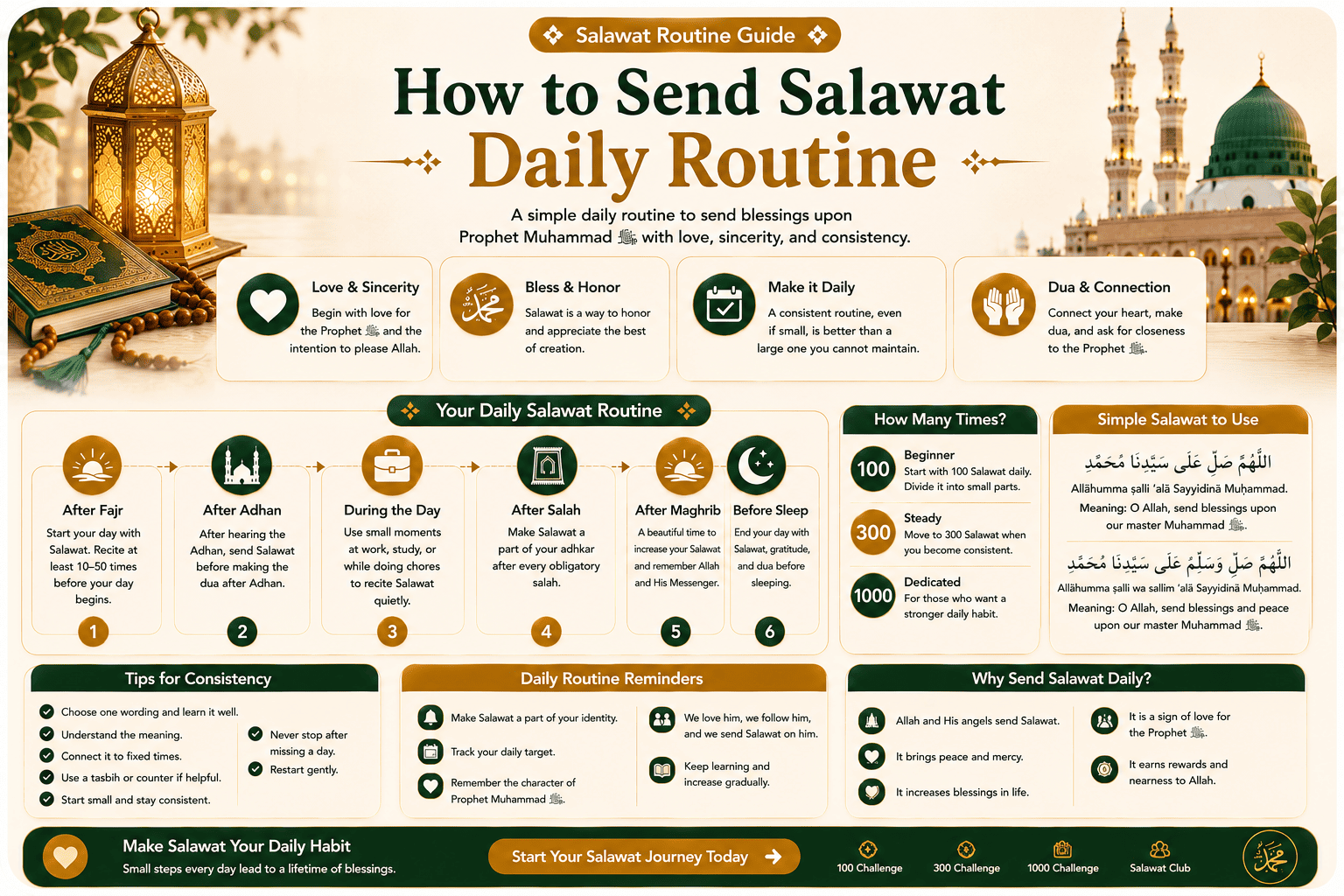
Attach salawat to Fajr, the Adhan, travel, a work break, Maghrib, or bedtime.
Begin With a Realistic Target
Choose 10, 33, 50, or 100 instead of starting with an amount that feels overwhelming.
Recite With Love and Respect
Occasionally slow down and remember the mercy, character, sacrifice, and guidance of Prophet Muhammad ﷺ.
Remain Consistent
If you miss a day, restart gently rather than abandoning the habit completely.
Best Times to Send Salawat
After the Adhan
After repeating the words of the muʾadhdhin, send salawat upon Prophet Muhammad ﷺ before making the duʿāʾ after the Adhan.
During Duʿāʾ
Begin by praising Allah, send salawat, make your requests, and conclude with praise and salawat.
On Friday
Increase salawat on Friday and during the night leading into Jumuʿah.
Read the Friday Salawat Guide →After Salah
Attach a small number of salawat to one or more obligatory prayers as part of your personal remembrance.
While Walking or Travelling
Use commuting, waiting, walking, driving, and quiet work breaks as opportunities for remembrance.
Before Sleeping
End the day with salawat, gratitude, reflection, and personal duʿāʾ.
How Many Times Should You Send Salawat?
There is no single compulsory daily number for a personal salawat routine outside prescribed worship. Choose an amount that you can maintain sincerely and without unnecessary pressure.
Beginner Target
A practical daily starting point that can be divided between the morning, daytime, and evening.
Start With 100 →Steady Target
A suitable next step after the beginner routine becomes stable and comfortable.
Move to 300 →Dedicated Target
A larger routine for those who already maintain salawat consistently and without strain.
Explore 1000 →7-Day Plan for Learning How to Send Salawat
Common Mistakes When Learning How to Send Salawat
Waiting for the Perfect Routine
Begin with one short wording and one dependable daily moment instead of delaying.
Starting With Too Much
Choose a realistic number so the practice remains sustainable and peaceful.
Ignoring the Meaning
Review the translation regularly so the words remain connected to sincere supplication.
Focusing Only on Counting
Counting may help consistency, but the heart should also remain connected to love, honour, and remembrance.
Giving Up After Missing a Day
Restart the following day without guilt. One missed day should not end the entire habit.
Sharing Unverified Rewards
Verify specific promised rewards and fixed-number claims before attributing them to Prophet Muhammad ﷺ.
Daily Checklist for Sending Salawat
Begin Sending Salawat Today
Choose one simple wording, understand its meaning, connect it to a fixed daily time, and allow consistency to grow gradually.
Start the Beginner ChallengeRelated Salawat Resources
Short Daily Salawat
Learn a brief and easy wording that is suitable for beginners, children, and busy Muslims.
Learn the Short Wording →Salawat With Salam
Learn a simple wording that includes both blessings and peace upon Prophet Muhammad ﷺ.
Open the Salawat With Salam Guide →Salat Ibrahimiyyah
Read the complete Arabic, transliteration, meaning, and practical guidance for Salat Ibrahimiyyah.
Learn Salat Ibrahimiyyah →Daily Salawat Routine
Build a practical daily schedule using fixed times and manageable targets.
Start the Daily Routine →Authentic Hadith on Salawat
Read recognised narrations about the rewards and virtues of sending blessings upon Prophet Muhammad ﷺ.
Read the Hadith Guide →Salawat Library
Browse the complete Halalings collection of salawat guides, challenges, hadith, FAQs, and printable resources.
Visit the Salawat Library →FAQ About How to Send Salawat
What is the simplest way to send salawat?
A simple wording is: “Allāhumma ṣalli ʿalā Sayyidinā Muḥammad,” meaning, “O Allah, send blessings upon our master Muhammad ﷺ.”
Do I need to use a long wording?
No. A short sound wording may be used for daily remembrance. Salat Ibrahimiyyah is also one of the most established forms.
Can I send salawat at any time?
Yes. Salawat may be recited during suitable moments throughout the day, including after the Adhan, during duʿāʾ, while travelling, after salah, and before sleeping.
How many times should I recite salawat daily?
There is no compulsory daily number for a personal routine. Begin with a realistic target such as 10, 33, 50, or 100 and remain consistent.
Should I understand the meaning?
Yes. Learning the meaning helps make the recitation more sincere, focused, and connected to love and respect for Prophet Muhammad ﷺ.
Can children learn to send salawat?
Yes. Children can begin with a short wording and a small daily target, especially after Maghrib, before sleeping, or with the family on Friday.
What should I do if I miss one day?
Restart the following day without guilt. One missed day should not become the reason to abandon the habit.
Further Reading
❤️ Support Halalings
If this guide on how to send salawat has benefited you, consider supporting Halalings. Your contribution helps us continue creating free Islamic articles, printable guides, children’s resources, and educational content for Muslims around the world, in shā’ Allāh.
Unable to donate? Sharing this page and making duʿāʾ for Halalings are also valuable ways to support the project. May Allah accept it from all of us. Āmīn.
📚 Continue Learning
Salawat Library • Virtues of Salawat • Qur’an Verses About Salawat • Authentic Hadith • Benefits of Daily Salawat • Best Times to Recite Salawat • Common Mistakes • Short Daily Salawat • Salawat With Salam • Salat Ibrahimiyyah • Daily Salawat Routine • 100 Salawat Challenge • 300 Salawat Challenge • 1000 Salawat Challenge • Salawat Club