
Qur'an Verses About Salawat
Qur'an Verses About Salawat: Explore the Qur'anic foundation for sending blessings and peace upon Prophet Muhammad ﷺ, especially Surah Al-Ahzab 33:56, with Arabic text, meaning, explanation, key lessons, and practical guidance.
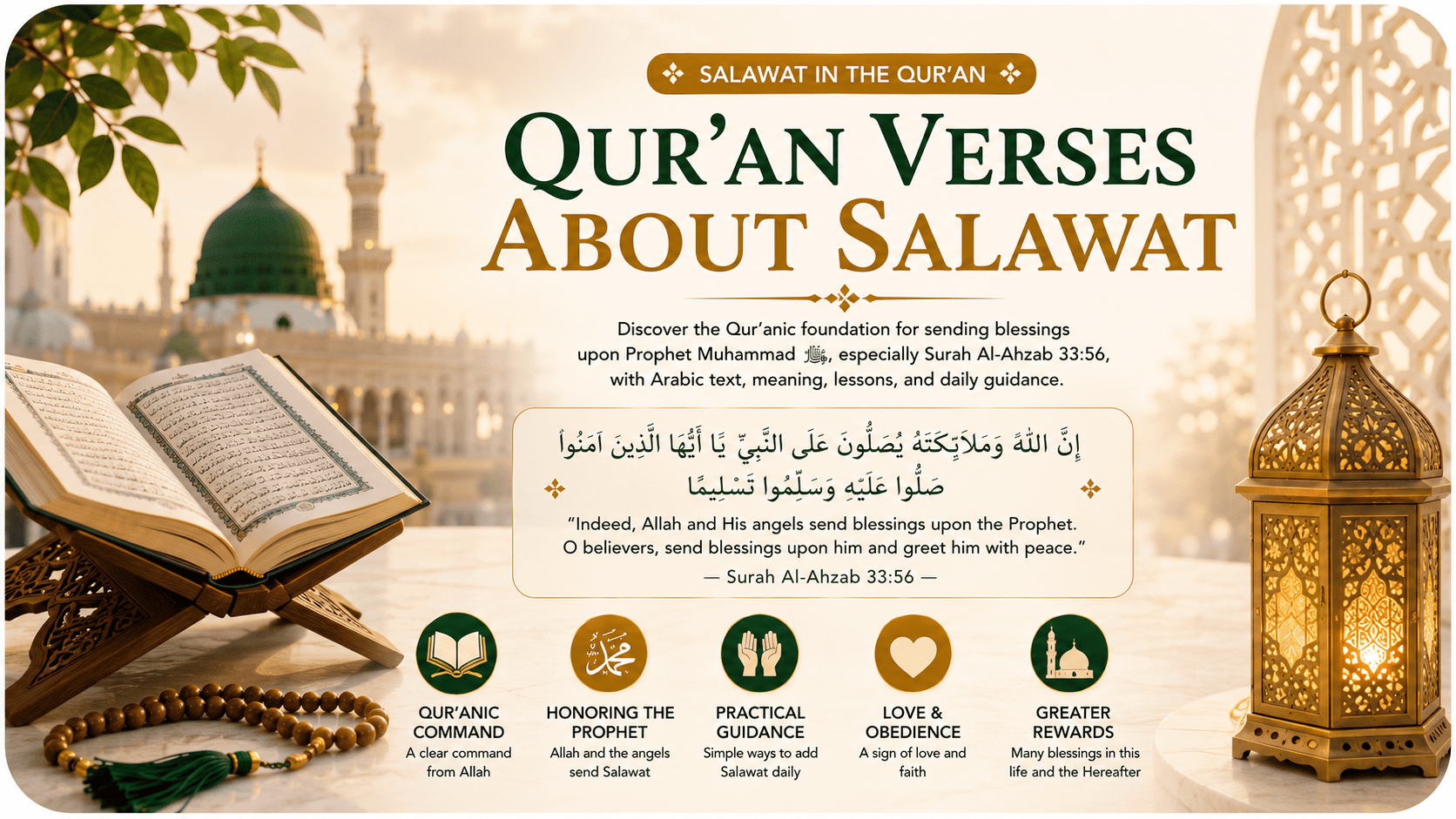
The Main Qur'an Verse About Salawat
The clearest and most direct Qur'anic verse about salawat appears in Surah Al-Ahzab. In this verse, Allah mentions His blessings upon the Prophet ﷺ and the blessings of the angels before commanding the believers to send blessings and peace upon him.
Meaning: Indeed, Allah and His angels send blessings upon the Prophet. O believers, send blessings upon him and greet him with peace.
What Qur'an Verses About Salawat Teach Us
Surah Al-Ahzab 33:56 demonstrates the exceptional honour Allah has granted Prophet Muhammad ﷺ. Before commanding believers to send blessings, Allah first mentions that He and His angels send blessings upon the Prophet ﷺ.
When a Muslim sends salawat, that person responds to Allah's command through an act of love, obedience, respect, gratitude, and remembrance.
The verse also commands believers to send peace upon him. Therefore, the Qur'anic instruction includes both salawat and salam.
Key Lessons from the Qur'an Verse About Salawat
Allah Honours the Prophet ﷺ
The verse begins by mentioning Allah's salawat upon Prophet Muhammad ﷺ, demonstrating his honoured position.
The Angels Send Salawat
The angels also send blessings upon the Prophet ﷺ, showing that this honoured remembrance takes place in the heavens.
Believers Receive a Direct Command
Allah directly instructs the believers to send blessings and peace upon Prophet Muhammad ﷺ.
Salawat Expresses Love and Obedience
Responding to the verse combines love for the Prophet ﷺ with obedience to Allah's command.
The Qur'an Commands Salam Too
The verse includes both blessings and peace, teaching Muslims to honour the Prophet ﷺ with salawat and salam.
Salawat Should Become a Habit
The clarity of the command encourages Muslims to make salawat a regular part of daily remembrance.
A Simple Salawat Based on the Qur'anic Command
A short and easy wording that combines blessings and peace is:
Transliteration: Allāhumma ṣalli wa sallim ʿalā Sayyidinā Muḥammad.
Meaning: O Allah, send blessings and peace upon our master Muhammad ﷺ.
This wording is suitable for daily remembrance because it is short, easy to memorise, and includes both salawat and salam.
Read the Salawat With Salam Guide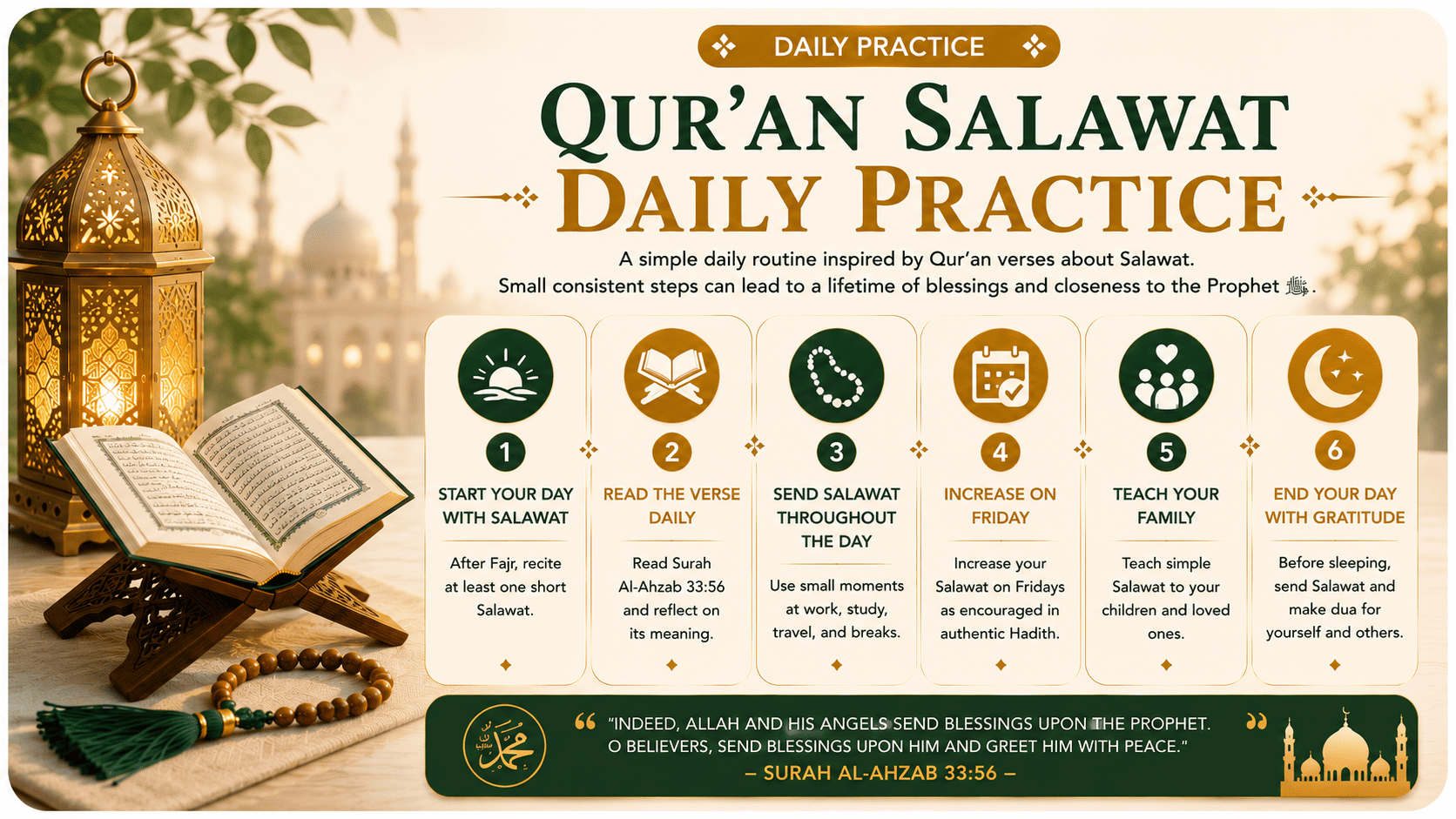
How to Apply the Qur'an Verses About Salawat
Learn One Authentic Salawat
Begin by learning one authentic wording that you can recite correctly every day. A short salawat is often the easiest place to start.
Understand the Meaning
Knowing the meaning of the words helps transform salawat from simple repetition into sincere remembrance and supplication.
Respond to the Qur'anic Command
Each time you send blessings upon Prophet Muhammad ﷺ, remember that you are responding to Allah's command in Surah Al-Ahzab 33:56.
Build a Daily Habit
Choose one fixed time after Fajr, after salah, during travel, or before sleeping to make salawat part of your daily routine.
Daily Practice Based on Qur'an Verses About Salawat
Common Questions About Qur'an Verses About Salawat
Is Surah Al-Ahzab 33:56 the main verse?
Yes. It is the clearest Qur'anic command instructing believers to send blessings and peace upon Prophet Muhammad ﷺ.
Does the Qur'an command believers?
Yes. Allah directly addresses the believers with the command to send both blessings and peace upon the Prophet ﷺ.
Why are angels mentioned first?
The verse highlights the honour of Prophet Muhammad ﷺ by mentioning that Allah and His angels send blessings before addressing the believers.
Can I use a short salawat?
Yes. A short authentic wording is an excellent way to begin responding to the Qur'anic command every day.
Building a Life Around Qur'an Verses About Salawat
The command in Surah Al-Ahzab is not limited to special occasions. Muslims can honour this verse every day through small but consistent acts of remembrance.
Morning
Begin your day with salawat after Fajr.
Throughout the Day
Use travel, work breaks, and waiting time for remembrance.
Evening
End the day with salawat, gratitude, and duʿāʾ.
Live the Qur'an Verses About Salawat Every Day
Read the verse, understand its meaning, send blessings with sincerity, and make salawat a lasting habit throughout your life.
Build Your Daily Salawat RoutineRelated Salawat Resources
How to Send Salawat
Learn authentic wordings, meanings, and practical guidance for sending salawat every day.
Read the Complete Guide →Short Daily Salawat
Start with a short Arabic wording that is easy to memorise and suitable for daily remembrance.
Learn the Short Salawat →Salawat With Salam
Learn a wording that combines both blessings and peace upon Prophet Muhammad ﷺ.
Open the Guide →Daily Salawat Routine
Build a realistic daily habit using practical schedules, reminders, and printable trackers.
Build Your Routine →Authentic Hadith on Salawat
Read authentic narrations explaining the virtues and rewards of sending blessings upon the Prophet ﷺ.
Read the Hadith →Salawat Library
Browse the complete Halalings collection of salawat guides, challenges, hadith, FAQs, and printable resources.
Visit the Library →FAQ About Qur'an Verses About Salawat
What is the main Qur'an verse about salawat?
The principal Qur'anic verse is Surah Al-Ahzab (33:56), where Allah commands believers to send blessings and peace upon Prophet Muhammad ﷺ.
Does the Qur'an directly command salawat?
Yes. Surah Al-Ahzab 33:56 explicitly commands believers to send blessings and peace upon Prophet Muhammad ﷺ.
Why does the verse mention Allah and the angels first?
The verse first mentions that Allah and His angels send blessings upon the Prophet ﷺ, demonstrating his honoured status before addressing the believers.
Can I respond with a short salawat?
Yes. A short authentic wording is an excellent way to practice this Qur'anic command every day.
Should I increase salawat on Friday?
Yes. Authentic hadith encourage Muslims to increase salawat on Friday in addition to maintaining a daily routine.
Can children learn this verse?
Yes. Children can memorise the verse gradually, learn its meaning, and begin practicing a short daily salawat.
Further Reading
❤️ Support Halalings
If this guide on Qur'an Verses About Salawat has benefited you, consider supporting Halalings. Your support helps us continue producing free Islamic articles, printable resources, children's materials, and authentic educational content for Muslims around the world, in shā' Allāh.
Unable to donate? Sharing this page and making duʿāʾ for Halalings are also valuable ways to support this project. May Allah reward you abundantly. Āmīn.
📚 Continue Learning
Salawat Library • How to Send Salawat • Authentic Hadith • Benefits of Daily Salawat • Best Times to Recite Salawat • Common Mistakes • Short Daily Salawat • Salawat With Salam • Salat Ibrahimiyyah • Daily Salawat Routine • 100 Salawat Challenge • 300 Salawat Challenge • 1000 Salawat Challenge • Salawat Club