
Salat al-Fatih
Salat al-Fatih: Read the Arabic text, transliteration, English meaning, historical background, scholarly context, balanced guidance, and practical ways to include this traditional salawat in daily remembrance.
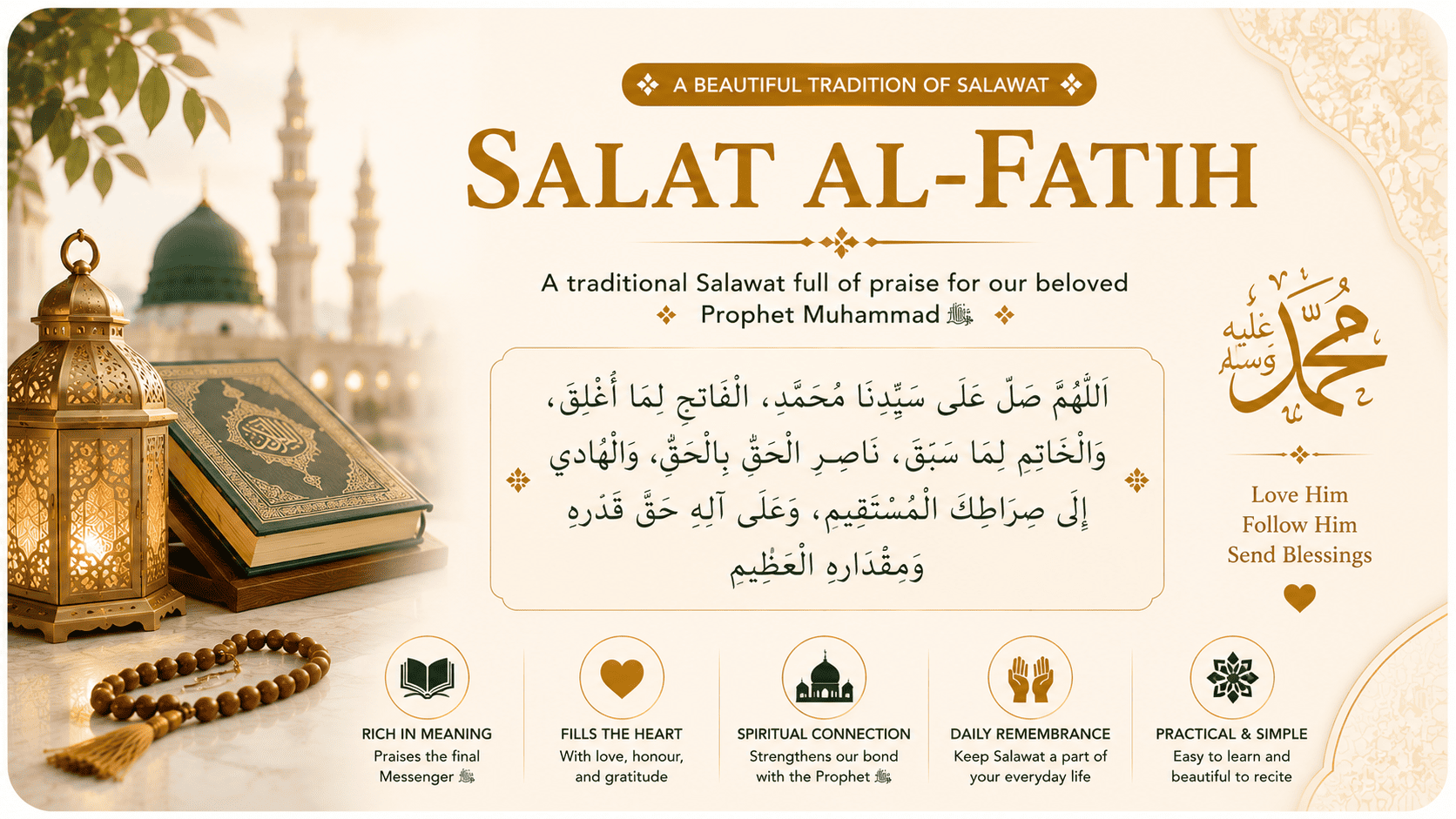
What Is Salat al-Fatih?
This is a well-known traditional salawat recited by many Muslims as a devotional prayer upon Prophet Muhammad ﷺ.
Its wording describes him as the opener of what was closed, the seal of what came before, the supporter of truth through truth, and the guide to the straight path.
The prayer is especially known within some scholarly and spiritual traditions and is widely associated with the Tijaniyyah order.
Salat al-Fatih in Arabic
Transliteration:
Allāhumma ṣalli ʿalā Sayyidinā Muḥammadin, al-Fātiḥi limā ughliqa, wal-khātimi limā sabaqa, nāṣiril-ḥaqqi bil-ḥaqqi, wal-hādī ilā ṣirāṭikal-mustaqīm, wa ʿalā ālihi ḥaqqa qadrihi wa miqdārihil-ʿaẓīm.
English meaning:
O Allah, send blessings upon our master Muhammad, the opener of what was closed, the seal of what came before, the supporter of truth through truth, and the guide to Your straight path; and upon his family, according to his true rank and his immense worth.
Understanding the Wording of Salat al-Fatih
The Opener of What Was Closed
This phrase points to the guidance, mercy, knowledge, and path of Islam that Allah opened for humanity through Prophet Muhammad ﷺ.
The Seal of What Came Before
This refers to Prophet Muhammad ﷺ as the final Prophet and Messenger, completing the line of prophethood.
The Supporter of Truth
The Prophet ﷺ supported and established truth through revelation, justice, wisdom, patience, mercy, and obedience to Allah.
The Guide to the Straight Path
Through his message and Sunnah, the Ummah learned the path of faith, worship, character, mercy, and obedience.
Scholarly Context and Traditional Practice
This wording is generally presented as a traditional devotional salawat rather than a formula directly established through an authentic hadith.
It has nevertheless been accepted and recited by many Muslims because its wording expresses honour, love, and praise for Prophet Muhammad ﷺ.
The scholar Shaykh Yusuf al-Nabhani (rahimahullah) included and discussed many well-known devotional forms of salawat in his writings. This particular wording is also especially prominent within the Tijaniyyah spiritual tradition.
For a wording clearly established in authentic narrations and recited in salah, Muslims should learn Salat Ibrahimiyyah.
Read Salat Ibrahimiyyah →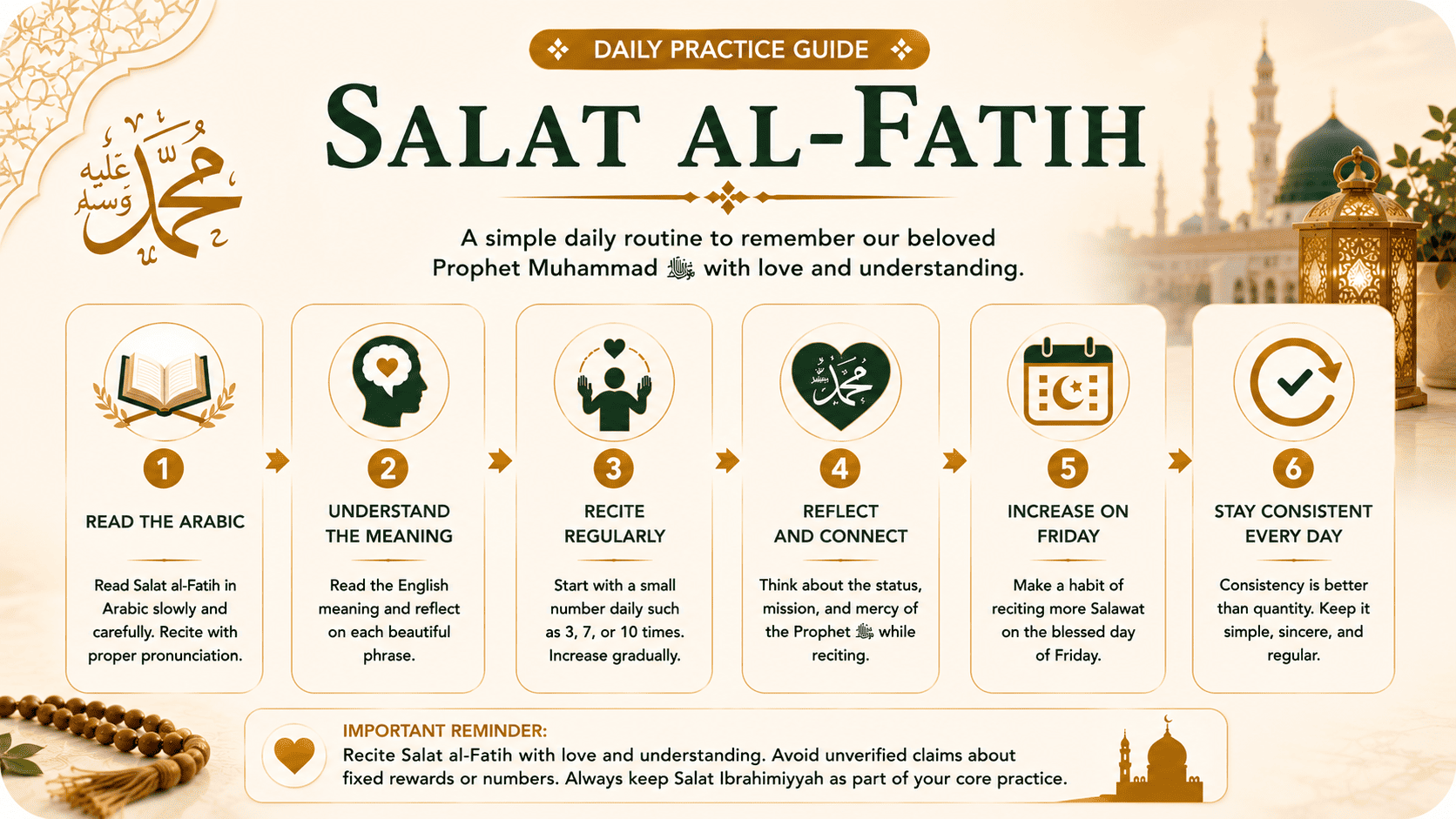
Benefits and Daily Value of This Traditional Salawat
Benefits of Reciting This Devotional Salawat
Like other sound forms of salawat, this prayer can help a believer remember Prophet Muhammad ﷺ with love, respect, gratitude, and reflection.
When to Recite Salat al-Fatih
As Part of a Daily Routine
You may include it after Fajr, after Maghrib, before sleeping, or during another fixed period of remembrance.
On Friday
Friday is a special day for increasing salawat upon Prophet Muhammad ﷺ. This wording may be included within your general Friday remembrance.
During Quiet Moments
It may be recited respectfully while sitting, walking, waiting, travelling, or resting.
How to Add Salat al-Fatih to Your Daily Practice
A Simple Seven-Day Practice Plan
Common Mistakes to Avoid
Presenting It as an Authentic Hadith
This wording should generally be described as a traditional devotional prayer unless reliable evidence is provided for a direct hadith attribution.
Believing Every Reward Claim
Specific claims about guaranteed outcomes, fixed numbers, or extraordinary rewards should be verified before being repeated.
Ignoring the Meaning
Learning the translation helps ensure that the recitation remains respectful, thoughtful, and spiritually meaningful.
Neglecting Established Wordings
Traditional devotional prayers should not replace established forms such as Salat Ibrahimiyyah taught in authentic narrations.
Balanced Guidance for Daily Recitation
A balanced practice combines love for Prophet Muhammad ﷺ, respect for traditional devotional wordings, and care when evaluating claims about specific rewards.
You may recite this wording if its meaning is understood and accepted, while grounding your beliefs about reward and virtue in reliable Qur'anic and hadith evidence.
Recite with Love, Balance, and Understanding
A devotional salawat becomes more meaningful when the wording is understood, the intention is sincere, and claims about special rewards are treated carefully.
Build a Daily Salawat RoutineRelated Salawat Resources
Salat Ibrahimiyyah
Learn the authentic salawat recited in every salah, with Arabic text, transliteration, English meaning, and explanation.
Read Salat Ibrahimiyyah →Authentic Hadith on Salawat
Read authentic narrations explaining the virtues and general rewards of sending blessings upon Prophet Muhammad ﷺ.
Read Authentic Hadith →Types of Salawat
Compare different traditional and authentic forms of salawat and understand their background.
Explore the Collection →Benefits of Daily Salawat
Discover how regular salawat strengthens remembrance, gratitude, and love for Prophet Muhammad ﷺ.
Read Benefits →Daily Salawat Routine
Create a realistic daily routine using practical schedules, reminders, and printable trackers.
Build Your Routine →Salawat Library
Browse every guide, challenge, article, printable, and resource available in the Halalings Salawat Library.
Open Library →Frequently Asked Questions About Salat al-Fatih
What is Salat al-Fatih?
It is a well-known traditional devotional salawat praising Prophet Muhammad ﷺ as the opener, the seal, the supporter of truth, and the guide to the straight path.
Is Salat al-Fatih found in authentic hadith?
It is generally presented as a traditional devotional wording rather than a salawat directly taught through an authentic hadith narration.
Can I recite Salat al-Fatih every day?
Yes. Many Muslims include it within their personal remembrance while also maintaining authentic forms of salawat such as Salat Ibrahimiyyah.
Should I believe every reward mentioned online?
No. Extraordinary claims about fixed numbers, guaranteed rewards, or unique spiritual outcomes should always be verified through reliable evidence.
Who is Salat al-Fatih commonly associated with?
It is especially well known within the Tijaniyyah spiritual tradition and has also been discussed by scholars such as Shaykh Yusuf al-Nabhani (rahimahullah).
What is the safest salawat to memorise first?
Salat Ibrahimiyyah remains the primary wording to memorise because it is established through authentic narrations and forms part of the daily prayer.
Further Reading
❤️ Support Halalings
If this guide on Salat al-Fatih has benefited you, consider supporting Halalings. Your support helps us continue producing authentic Islamic articles, printable resources, children's materials, and educational content for Muslims around the world, in shā' Allāh.
Unable to donate? Sharing this page and making duʿāʾ for Halalings are also valuable ways to support this project. May Allah accept it from all of us. Āmīn.
📚 Continue Learning
Salawat Library • How to Send Salawat • Qur'an Verses About Salawat • Authentic Hadith • Benefits of Daily Salawat • Best Times to Recite Salawat • Common Mistakes • Types of Salawat • Short Daily Salawat • Salawat with Salam • Salat Ibrahimiyyah • Daily Salawat Routine • 100 Salawat Challenge • 300 Salawat Challenge • 1000 Salawat Challenge • Salawat Club