
Salat al-Nariyah
Salat al-Nariyah: Read the Arabic text, transliteration, English meaning, traditional background, balanced guidance, and practical ways to include this devotional salawat in daily remembrance.
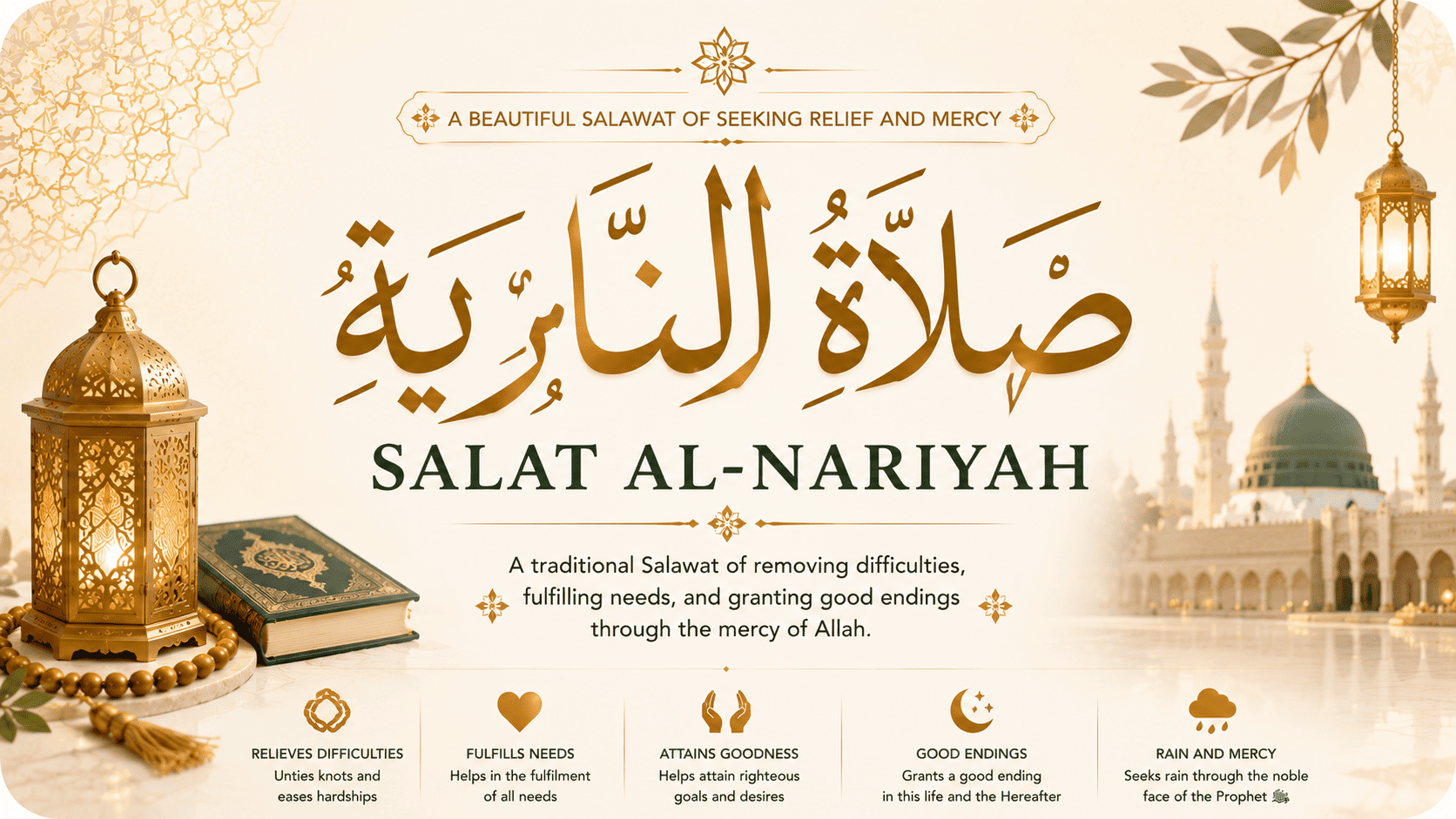
What Is Salat al-Nariyah?
This is a well-known traditional salawat recited by many Muslims as a devotional prayer upon Prophet Muhammad ﷺ.
It is also called Salat al-Tafrijiyyah in some communities because its wording is associated with asking Allah for relief from hardship, fulfilment of needs, beneficial outcomes, and a good ending.
The prayer combines blessings and peace upon Prophet Muhammad ﷺ with expressions of hope that Allah removes difficulty and grants goodness.
Salat al-Nariyah in Arabic
Transliteration:
Allāhumma ṣalli ṣalātan kāmilatan, wa sallim salāman tāmmā, ʿalā Sayyidinā Muḥammadin alladhī tanḥallu bihil-ʿuqad, wa tanfariju bihil-kurab, wa tuqḍā bihil-ḥawāʾij, wa tunālu bihir-raghāʾib, wa ḥusnul-khawātīm, wa yustasqal-ghamāmu biwajhihil-karīm, wa ʿalā ālihi wa ṣaḥbihi fī kulli lamḥatin wa nafasin, biʿadadi kulli maʿlūmin lak.
English meaning:
O Allah, send complete blessings and perfect peace upon our master Muhammad, through whose honoured means knots are loosened, distress is relieved, needs are fulfilled, desired good is attained, and good endings are granted; and through whose noble countenance rain is sought from Allah. Send blessings and peace upon his family and companions in every moment and breath, according to the number of everything known to You.
Understanding the Meaning of Salat al-Nariyah
Complete Blessings and Perfect Peace
The opening asks Allah to send complete blessings and peace upon Prophet Muhammad ﷺ, his family, and his companions.
Relief from Knots and Difficulties
The wording expresses hope that Allah unties complicated matters and grants relief from distress and hardship.
Fulfilment of Beneficial Needs
It contains a supplication that Allah fulfils lawful needs and enables the believer to attain beneficial goals.
Hope for a Good Ending
The prayer includes hope for ḥusn al-khātimah—a faithful and righteous ending to earthly life.
Seeking Rain from Allah
The wording recalls seeking rain from Allah while honouring the noble status of Prophet Muhammad ﷺ.
Abundant Blessings and Peace
Its closing asks for blessings and peace in every moment and breath, in a number known fully to Allah alone.
Is Salat al-Nariyah Established in Authentic Hadith?
This wording is generally known as a traditional devotional salawat rather than a formula directly taught through an authentic hadith narration.
Many Muslims nevertheless recite it because it sends blessings upon Prophet Muhammad ﷺ and includes hopeful supplication for relief, beneficial needs, mercy, and a good ending.
For a salawat clearly established in authentic narrations and recited in salah, Muslims should especially learn Salat Ibrahimiyyah.
Read Salat Ibrahimiyyah →Traditional Practice and Balanced Understanding
This prayer has been recited in Muslim communities, devotional gatherings, and traditional collections under the names Salat al-Nariyah and Salat al-Tafrijiyyah.
Its popularity reflects the appreciation many Muslims have for its combination of salawat and heartfelt supplication during times of difficulty.
Traditional use should be distinguished from prophetic attribution. A prayer may be used as general devotion while its unique numerical claims or promised results remain matters requiring evidence.
Benefits and Daily Practice of Salat al-Nariyah
Benefits of Reciting Salat al-Nariyah
Like other sound forms of salawat, this traditional prayer encourages remembrance of Prophet Muhammad ﷺ while strengthening hope in Allah, gratitude, humility, and sincere duʿāʾ.
When to Recite Salat al-Nariyah
During Times of Hardship
Many Muslims recite this prayer while asking Allah for patience, relief, guidance, protection, and ease during life's difficulties.
On Friday
Friday is among the best times to increase all forms of salawat upon Prophet Muhammad ﷺ.
As Part of Daily Dhikr
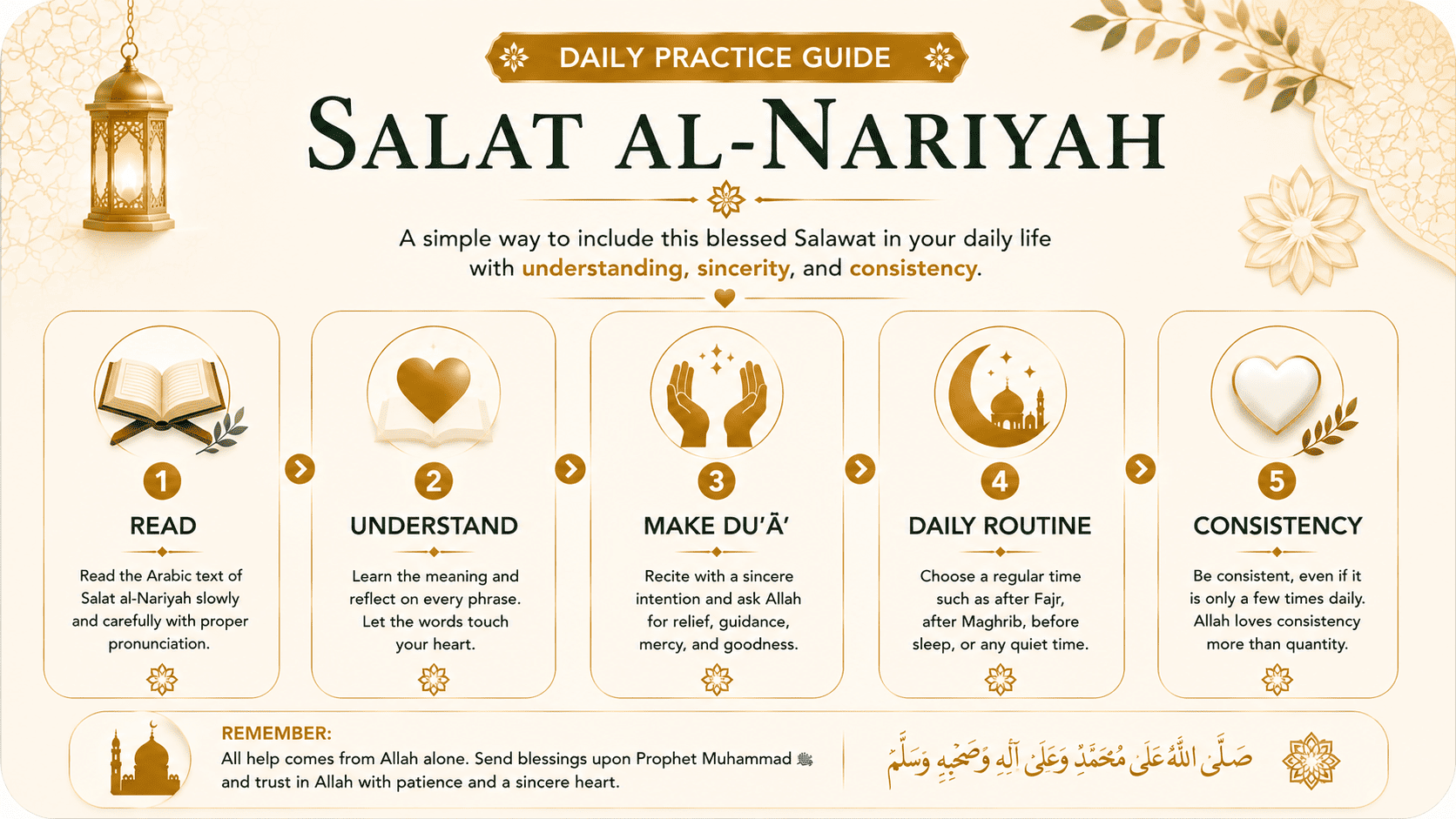
It may be included after Fajr, after Maghrib, before sleeping, or during another regular time of remembrance.
How to Include Salat al-Nariyah in Your Daily Routine
Seven-Day Learning Plan
Common Mistakes to Avoid
Presenting It as Authentic Hadith
Avoid describing this wording as an authentic hadith unless supported by reliable scholarly evidence.
Believing Every Online Reward Claim
Claims about guaranteed outcomes, exact numbers, or extraordinary virtues should always be verified carefully.
Ignoring the Meaning
Learning the translation transforms repetition into thoughtful remembrance and meaningful duʿāʾ.
Replacing Authentic Salawat
Traditional devotional prayers should complement—not replace—Salat Ibrahimiyyah and other authentically established forms.
Balanced Guidance for Daily Recitation
Salat al-Nariyah is best approached as a devotional salawat that combines blessings upon Prophet Muhammad ﷺ with sincere supplication directed to Allah alone.
Recite it with understanding, avoid exaggeration, and let authentic Qur'anic guidance and reliable hadith remain the foundation for beliefs about reward and virtue.
Recite with Hope, Love, and Understanding
Let Salat al-Nariyah strengthen your remembrance of Prophet Muhammad ﷺ while keeping your heart firmly connected to Allah through sincere duʿāʾ.
Build Your Daily Salawat RoutineRelated Salawat Resources
Salat Ibrahimiyyah
Learn the authentic salawat recited in every salah with Arabic text, transliteration, English meaning, and explanation.
Read Salat Ibrahimiyyah →Authentic Hadith on Salawat
Explore authentic narrations explaining the virtues and rewards of sending blessings upon Prophet Muhammad ﷺ.
Read Authentic Hadith →Benefits of Daily Salawat
Discover how regular salawat strengthens remembrance, gratitude, and love for Prophet Muhammad ﷺ.
Explore the Benefits →Daily Salawat Routine
Build a consistent routine using practical schedules, reminders, and printable trackers.
Build Your Routine →Types of Salawat
Compare authentic and traditional forms of salawat while learning their background and scholarly context.
Explore the Collection →Salawat Library
Browse the complete Halalings collection of salawat guides, Arabic texts, challenges, FAQs, and printable resources.
Visit the Library →Frequently Asked Questions About Salat al-Nariyah
What is Salat al-Nariyah?
Salat al-Nariyah is a traditional devotional salawat that combines blessings upon Prophet Muhammad ﷺ with supplications asking Allah for relief, guidance, mercy, and beneficial outcomes.
Is Salat al-Nariyah an authentic hadith?
It is generally recognised as a traditional devotional wording rather than a salawat directly transmitted through an authentic hadith narration.
Can I recite Salat al-Nariyah every day?
Yes. Many Muslims include it in their personal remembrance while continuing to prioritise authentically established forms such as Salat Ibrahimiyyah.
Should I believe all reward claims associated with it?
No. Claims involving fixed numbers, guaranteed outcomes, or extraordinary rewards should always be verified using reliable Islamic sources.
Why is it also called Salat al-Tafrijiyyah?
Some Muslim communities know this same devotional salawat by the name Salat al-Tafrijiyyah because of its emphasis on asking Allah for relief from hardship.
What salawat should every Muslim memorise first?
Salat Ibrahimiyyah remains the primary salawat every Muslim should learn because it is authentically established and recited during the daily prayers.
Further Reading
❤️ Support Halalings
If this guide on Salat al-Nariyah has benefited you, consider supporting Halalings. Your support helps us continue creating free Islamic articles, printable resources, children's materials, and authentic educational content for Muslims around the world, in shā' Allāh.
Unable to donate? Sharing this article and making duʿāʾ for Halalings are also valuable ways to support this project. May Allah reward you abundantly. Āmīn.
📚 Continue Learning
Salawat Library • How to Send Salawat • Qur'an Verses About Salawat • Authentic Hadith • Benefits of Daily Salawat • Best Times to Recite Salawat • Common Mistakes • Types of Salawat • Short Daily Salawat • Salawat with Salam • Salat Ibrahimiyyah • Salat al-Fatih • Salat al-Munjiyah • Daily Salawat Routine • 100 Salawat Challenge • 300 Salawat Challenge • 1000 Salawat Challenge • Salawat Club