
Salat al-Tibbiyyah
Salat al-Tibbiyyah: Read the Arabic text, transliteration, English meaning, traditional healing-related background, balanced guidance, and practical ways to include this devotional salawat in daily remembrance.

What Is Salat al-Tibbiyyah?
This is a well-known traditional salawat associated with themes of healing, wellness, spiritual light, and comfort.
The word tibbiyyah is related to healing or medicine. Its wording describes Prophet Muhammad ﷺ in connection with the healing of hearts, the wellness of bodies, and the illumination of sight.
This should be understood through sound Islamic belief: Allah alone creates healing and cure. The guidance, Sunnah, mercy, and message brought by Prophet Muhammad ﷺ are among the greatest means through which hearts receive spiritual life and direction.
Salat al-Tibbiyyah in Arabic
Transliteration:
Allāhumma ṣalli ʿalā Sayyidinā Muḥammadin ṭibbil-qulūbi wa dawāʾihā, wa ʿāfiyatil-abdāni wa shifāʾihā, wa nūril-abṣāri wa ḍiyāʾihā, wa ʿalā ālihi wa ṣaḥbihi wa sallim.
English meaning:
O Allah, send blessings upon our master Muhammad, the healing of hearts and their remedy, the wellness of bodies and their healing, and the light of eyes and their illumination. Send blessings and peace upon his family and companions.
Understanding the Meaning of Salat al-Tibbiyyah
The Healing of Hearts
The message of Prophet Muhammad ﷺ brings faith, guidance, repentance, remembrance, mercy, and moral clarity to hearts affected by heedlessness and spiritual confusion.
The Remedy for Spiritual Illness
His Sunnah teaches believers how to address pride, envy, despair, anger, attachment to sin, and distance from Allah.
Wellness and Healing of Bodies
The wording expresses hope for bodily well-being while reminding believers that cure comes from Allah and that lawful treatment should be pursued.
The Light and Illumination of Sight
This may be understood as physical well-being and as spiritual insight—the ability to recognise truth, guidance, and the signs of Allah.
Blessings Upon His Family
The prayer includes blessings upon the family of Prophet Muhammad ﷺ, honouring those closely connected to him.
Peace Upon His Companions
It also includes his companions, who preserved and transmitted the Qur'an, Sunnah, and teachings of Islam.
Is Salat al-Tibbiyyah Established in Authentic Hadith?
This wording is generally known as a traditional devotional salawat rather than a formula directly established through an authentic hadith narration.
Many Muslims nevertheless recite it because its wording contains salawat upon Prophet Muhammad ﷺ and reflects themes of spiritual healing, bodily well-being, guidance, and light.
For a salawat clearly established through authentic narrations and recited during salah, Muslims should especially learn Salat Ibrahimiyyah.
Read Salat Ibrahimiyyah →Traditional Practice and Healing-Related Use
This prayer has appeared in traditional salawat collections and has been recited in Muslim communities as a devotional expression during illness, worry, weakness, and periods of spiritual need.
Its benefit should be understood within a balanced framework. A believer may combine salawat, duʿāʾ, Qur'anic recitation, authentic ruqyah, charity, repentance, medical care, and other lawful means.
Using medical treatment does not contradict trust in Allah. Treatment is one of the means Allah has placed within creation, while the final result remains entirely in His hands.
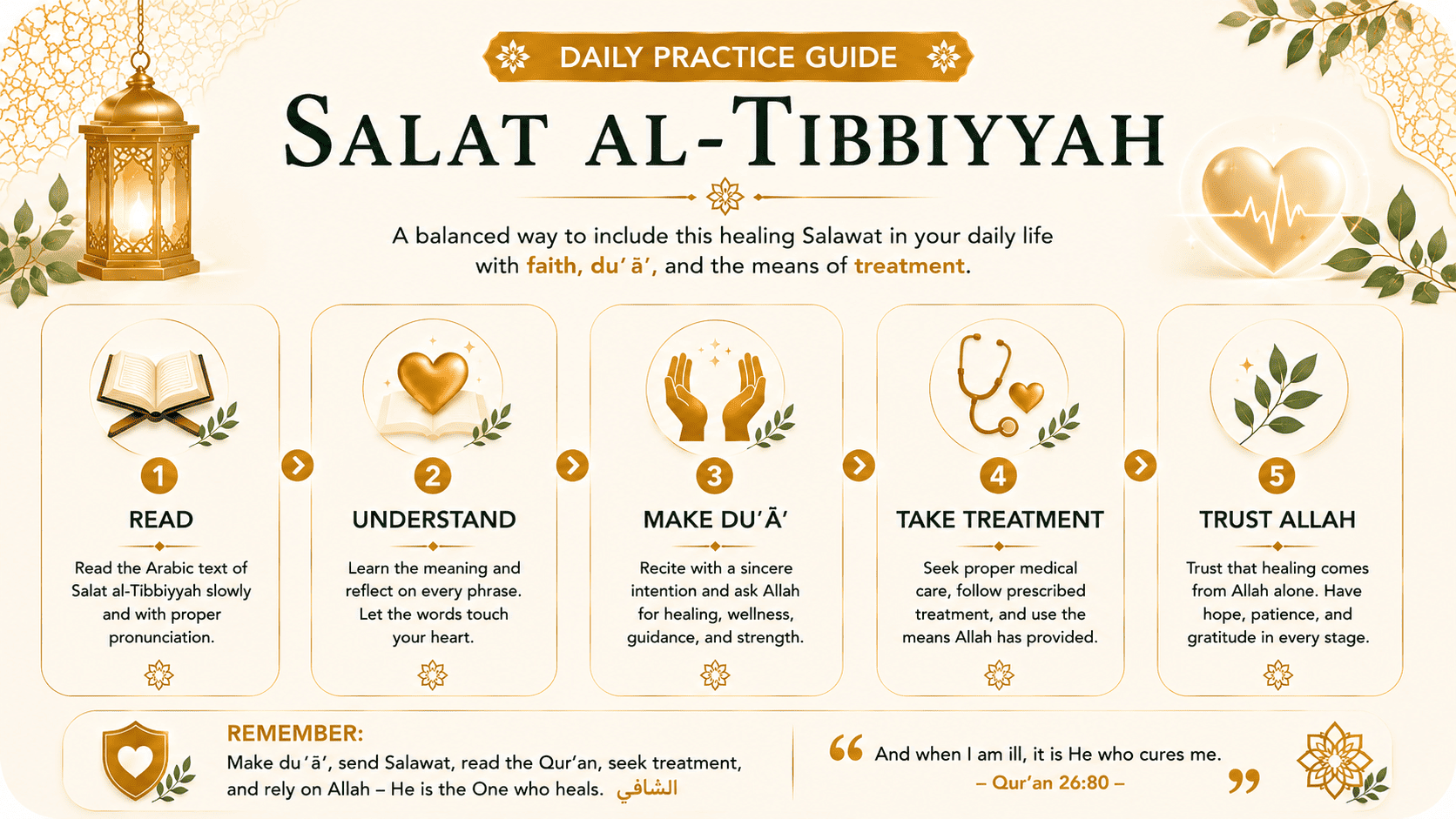
Benefits and Daily Practice of Salat al-Tibbiyyah
Benefits of Reciting Salat al-Tibbiyyah
Like other sound forms of salawat, this traditional prayer can strengthen remembrance of Prophet Muhammad ﷺ while encouraging hope in Allah, spiritual reflection, and sincere duʿāʾ.
When to Recite Salat al-Tibbiyyah
During Illness or Recovery
It may be recited while asking Allah for cure, patience, strength, beneficial treatment, and complete well-being.
For Spiritual Healing
It can be included in duʿāʾ when seeking softness of heart, repentance, clarity, guidance, and renewed closeness to Allah.
On Friday
Friday is among the best times to increase all forms of salawat upon Prophet Muhammad ﷺ.
How to Include Salat al-Tibbiyyah in Your Routine
Seven-Day Learning and Reflection Plan
Common Mistakes to Avoid
Presenting It as Authentic Hadith
Avoid describing this exact wording as an authentic hadith unless reliable scholarly evidence establishes that attribution.
Replacing Medical Care
Do not stop prescribed medicine, delay urgent assessment, or avoid professional care because of a devotional practice.
Believing Guaranteed Cure Claims
No unverified wording or fixed number should be presented as an automatic guarantee of physical healing.
Ignoring the Meaning
Understanding the translation helps keep the recitation connected to sound belief, reflection, and sincere duʿāʾ.
Focusing Only on Numbers
A smaller amount recited sincerely is better than a large target that creates pressure or superstition.
Neglecting Authentic Salawat
Traditional devotional wordings should complement, not replace, Salat Ibrahimiyyah and other authentically established forms.
Balanced Guidance for Healing and Devotion
Salat al-Tibbiyyah is best approached as a devotional salawat connected with spiritual reflection and supplication to Allah for wellness.
A balanced Muslim response to illness may include duʿāʾ, salawat, Qur'anic recitation, authentic ruqyah, charity, patience, medical assessment, prescribed treatment, healthy habits, and family support.
Ask Allah for Healing While Taking the Right Means
Recite with love, hope, and sound belief. Continue appropriate medical care and trust that every cure, improvement, and outcome ultimately comes from Allah.
Build Your Daily Salawat RoutineRelated Salawat Resources
Salat Ibrahimiyyah
Learn the authentic salawat recited in every salah with Arabic text, transliteration, English meaning, and explanation.
Read Salat Ibrahimiyyah →Authentic Hadith on Salawat
Discover authentic narrations explaining the virtues and rewards of sending blessings upon Prophet Muhammad ﷺ.
Read Authentic Hadith →Benefits of Daily Salawat
Explore the spiritual benefits of making salawat a regular part of your daily worship and remembrance.
Explore the Benefits →Daily Salawat Routine
Build a practical daily routine with reminders, printable trackers, and realistic goals.
Build Your Routine →Types of Salawat
Compare authentic and traditional forms of salawat while learning their meanings and scholarly background.
Explore the Collection →Salawat Library
Browse the complete Halalings Salawat Library with guides, Arabic texts, challenges, FAQs, and printable resources.
Visit the Library →Frequently Asked Questions About Salat al-Tibbiyyah
What is Salat al-Tibbiyyah?
Salat al-Tibbiyyah is a traditional devotional salawat that praises Prophet Muhammad ﷺ while asking Allah for healing, wellness, guidance, and spiritual light.
Is Salat al-Tibbiyyah from authentic hadith?
It is generally recognised as a traditional devotional wording rather than a salawat directly narrated in an authentic hadith.
Can I recite Salat al-Tibbiyyah every day?
Yes. Many Muslims include it within their daily remembrance while continuing to prioritise authentically established forms such as Salat Ibrahimiyyah.
Does Salat al-Tibbiyyah replace medical treatment?
No. Muslims should continue seeking appropriate medical care, investigations, prescribed treatment, and professional advice while making duʿāʾ and sending salawat.
Can I recite it for someone who is ill?
Yes. You may recite salawat and make sincere duʿāʾ asking Allah to grant healing, patience, mercy, and complete recovery for the sick person.
What salawat should every Muslim memorise first?
Salat Ibrahimiyyah remains the primary salawat every Muslim should memorise because it is authentically established and recited in the daily prayers.
Further Reading
❤️ Support Halalings
If this guide on Salat al-Tibbiyyah has benefited you, consider supporting Halalings. Your support helps us continue creating free Islamic articles, printable resources, children's materials, and authentic educational content for Muslims around the world, in shā' Allāh.
Unable to donate? Sharing this article and making duʿāʾ for Halalings are also valuable ways to support this project. May Allah reward you abundantly and grant healing, mercy, and barakah to all. Āmīn.
📚 Continue Learning
Salawat Library • How to Send Salawat • Qur'an Verses About Salawat • Authentic Hadith • Benefits of Daily Salawat • Best Times to Recite Salawat • Common Mistakes • Types of Salawat • Short Daily Salawat • Salawat with Salam • Salat Ibrahimiyyah • Salat al-Fatih • Salat al-Munjiyah • Salat al-Nariyah • Daily Salawat Routine • 100 Salawat Challenge • 300 Salawat Challenge • 1000 Salawat Challenge • Salawat Club